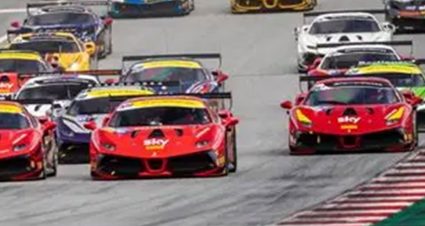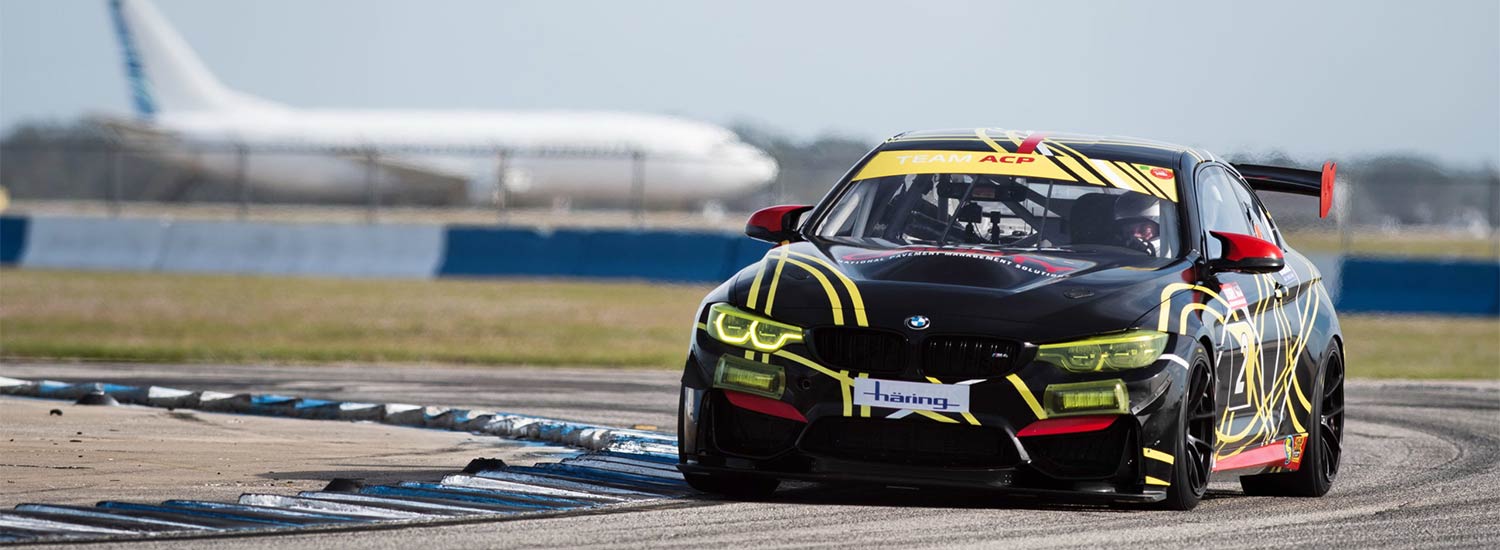
World Racing League returns to Sebring International Raceway Nov. 7-9 with an anticipated full field of cars from four diverse categories. A total of 15 hours of racing in two separate endurance races will take place Saturday and Sunday.
Opening day will include up to eight hours of testing, with Nov. 10 featuring an eight-hour race on the 3.74-mile circuit starting at approximately 9 a.m., and a Nov. 11 seven-hour race beginning at approximately 8 a.m.
Tickets include a three-day pass allowing overnight camping from Friday-Sunday for $20 per person, and a one-day pass for either Saturday or Sunday is $10. Children 12 and under are admitted free, and on-site camping is also free. Full power and water RV camping spots also are available for $100. Unreserved parking is included. All tickets will be available on-site and can be purchased at Gate 1.
As many as 75 cars from throughout the United States will compete in this WRL National event and Sebring will also be the season-ending WRL Eastern Championship. Five different classes will compete including GTO, GTU, GP1, GP2 and GP3 with both professional and amateur drivers throughout the 15 hours of racing.
WRL’s races are split into categories determined by power-to-weight ratios (PWR). These classes are split further into GP (General Production) and GTO (Grand Touring Open) classes. A car’s PWR is determined by dividing its weight (full of fuel, no driver, empty cool box) by its horsepower as measured on an on-site Dynojet.
General Production – General Production (GP) classes are governed by both their PWR ratio as well as a modifier table that balances both the performance gains certain components add. All GP class cars must be mass-produced and available for sale in North America. Some exceptions may be made for factory race cars at WRL’s discretion (Ford Mustang FR500s for example) but they must remove all modifiers over the base model. The GP classes represent the home-built, grassroots cars and the rules encourage creativity with many ways to build the same car to the competitive end of the class.
- GP1 (10.5 – 12.79 PWR) – GP1 cars represent the fastest of the General Production classes. Examples of GP1 cars include Nissan 350z, Porsche 987 3.4 Cayman, BMW E46 M3 with detune/ballast and V6 swapped Miata’s.
- GP2 (12.8 – 15.09 PWR) – GP2 cars balance speed and affordability, and lower weight can lead to better handling. Examples of GP2 cars include Spec E46 with ballast, BMW E36 M3, Mazda NC MX-5 w/ 2.5 swap, 2005+ Ford Mustang V6, Porsche Boxster and Lexus SC300.
- GP3 (15.0 – 18.0 PWR) – GP3 cars might represent the highest end of the PWR scale, but the racing is amazing and participation level is high. Examples of GP3 cars include Mazda MX-5/Miata (all), Porsche Boxster, BMW E36 325i/328i, Lexus is300, Porsche 944 and E30.
- Grand Touring Over (9.0 – 18.0 PWR, over 2400 lbs) – Grand Touring Over is the fastest open class for WRL cars weighing more than 2,400 pounds with a minimum PWR of 9.0:1. The simple PWR limit combined with a sophisticated fuel formula makes GTO one of the most consistently competitive classes. The GTO class allows factory built and tube framed cars. Examples of GTO cars include GT4 homologation, TCR homologation, PWC, V8 or V6 swapped MX-5/Miata, BMW E46 M3, 981/987 Cayman S, 996 Porsche 911.
- Grand Touring Under (9.0 – 18.0 PWR, under 2,400 lbs) – Grand Touring Under is the fastest open class for WRL cars under 2,400 pounds with a minimum PWR of 9.0:1. GTU cars run at 9.0:1 PWR. This class is primarily comprised of small prototypes (windshields and cages matching WRL specifications required) and highly modified street cars like Lotus Elise, MX-5, etc. Low-windshield-height vehicles are required to run a beacon light on top for safety and visibility.